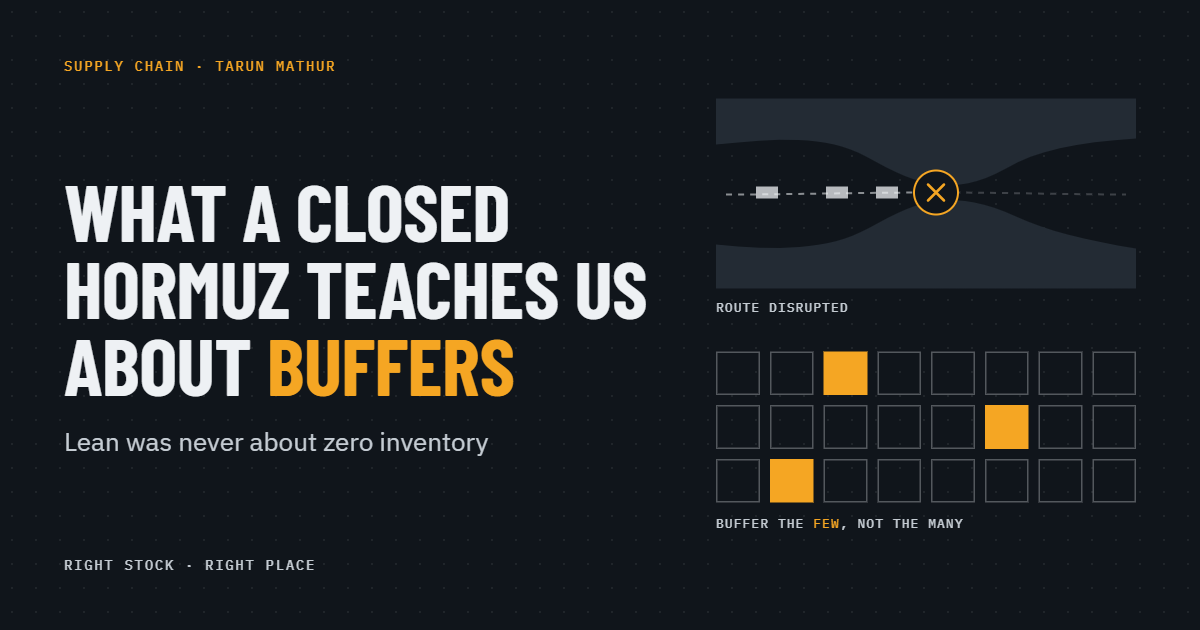
Buffer the Few, Not the Many
For years, we were taught that inventory is waste. Lean thinking, just-in-time, information replacing stock. Most of that lesson was right.
Then the Strait of Hormuz went quiet.
Since late February, one of the world’s most important shipping lanes has been closed, briefly reopened, and disrupted again. Freight, fuel and insurance costs have climbed. Routes that looked permanent for decades have had to be rebuilt in weeks.
And a familiar debate has returned: should we be holding more stock?
My answer is: some, but in the right places.
Visibility tells you a problem is coming. It cannot conjure a part that is stuck on the wrong side of a strait. When the disruption is longer than your lead time, the only thing that keeps the line running is material you already own.
But the answer is not to fill every warehouse. That simply trades one risk for another, with cash tied up in parts that were never at risk.
The real lesson is to place buffers deliberately. Ask three questions of every critical item:
- Where does it actually come from, including the tier-two and tier-three suppliers behind it?
- How long would it take to qualify an alternative?
- What does a stopped line cost compared with a month of extra stock?
The answers will show that most items need no extra protection, and a few need far more than they have.
Lean was never about zero inventory. It was about the right inventory in the right place. Hormuz has simply reminded us that “right” depends on what can go wrong.
Have you changed your buffer strategy this year, or are you riding it out?
#SupplyChain #SupplyChainManagement #RiskManagement #Inventory #Logistics #SupplyChainResilience